How to Create a Simple Homeschool Science Routine for K–2
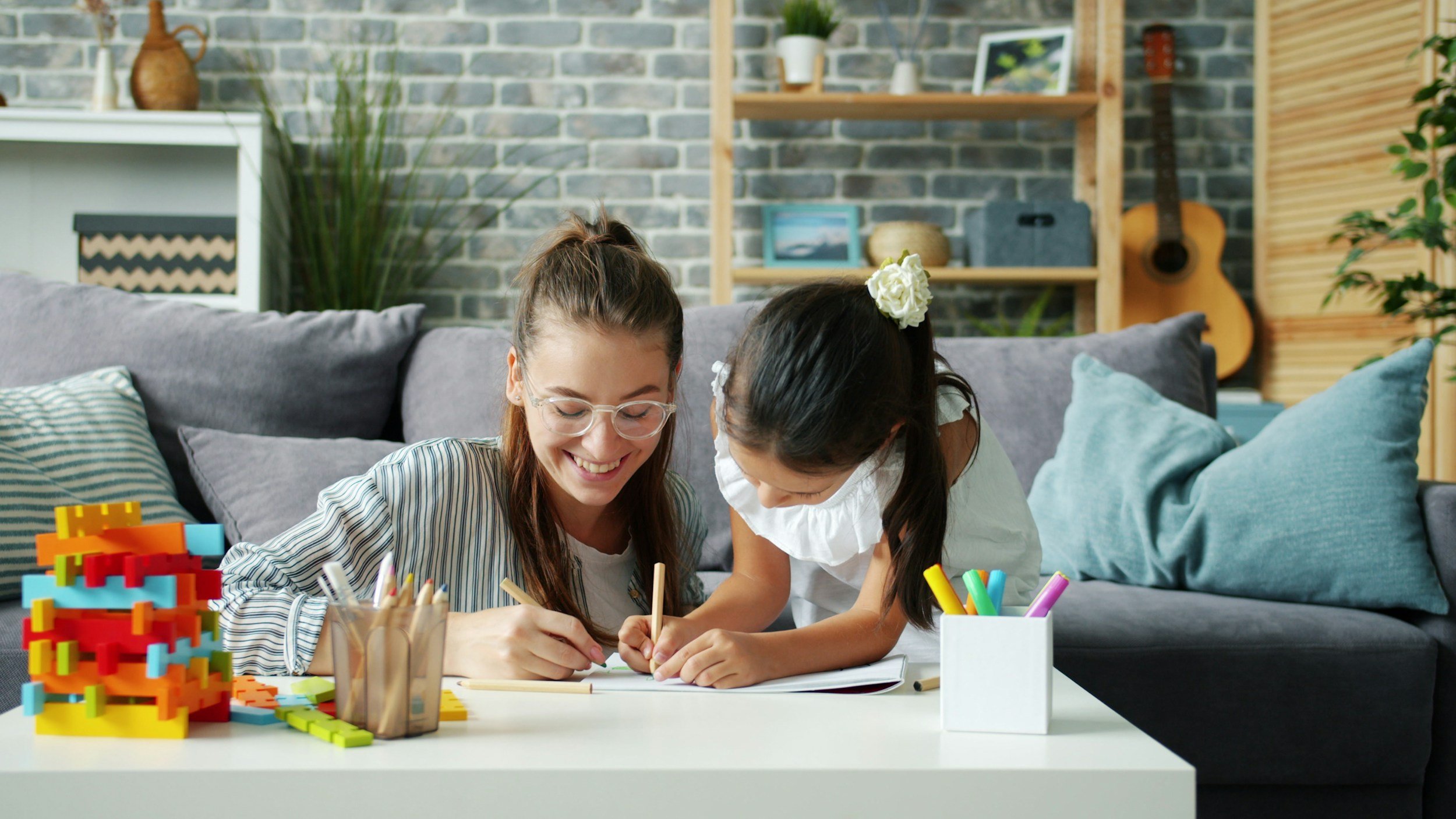
You don't need a complicated curriculum, a science degree, or a home laboratory to teach science at home.
For young children, some of the best science learning can happen with a cup of water, a few leaves from the backyard, a flashlight, or a question that comes up during breakfast.
The challenge for many homeschool parents isn't finding science activities. There are thousands of them.
The challenge is knowing how to turn those activities into a simple, meaningful homeschool science routine.
For children in kindergarten through second grade, science can be built around a few simple habits: notice, wonder, predict, investigate, and explain. These habits give children opportunities to practice the same kinds of thinking used in science without making science feel like another worksheet-heavy subject.
In this guide, we'll look at how to create an easy K–2 homeschool science routine that works with your family's schedule, uses inexpensive materials, and keeps your child's natural curiosity at the center.
What Does Science Look Like in K–2?
Science for young children doesn't have to mean memorizing vocabulary words or completing a long list of experiments.
At this age, children are developing foundational science practices. The Next Generation Science Standards emphasize asking questions based on observations, conducting simple investigations, collecting observations, and using those observations to explain what they notice.
That means a science lesson could look like:
Watching how a shadow changes throughout the day
Investigating which objects sink or float
Observing insects in the backyard
Comparing how quickly different ice cubes melt
Growing a seed and recording changes
Mixing colors and predicting what will happen
Looking at the Moon over several nights
Building something and testing whether it works
Asking why one plant is growing differently from another
The goal isn't to make every activity a formal experiment.
The goal is to help children become comfortable with observing the world, asking questions, making predictions, testing ideas, and talking about evidence.
Start With a Simple Weekly Rhythm
One of the easiest ways to make homeschool science manageable is to give it a predictable rhythm.
You don't need to plan a completely different science lesson every day.
Try a routine like this:
Monday: Introduce a Question
Begin with something your child can observe.
For example:
"Why do you think some things sink and other things float?"
Or:
"Why do you think this plant is growing toward the window?"
Let your child share ideas without immediately correcting them.
Their first idea doesn't have to be scientifically accurate. In fact, an unexpected idea can give you a wonderful starting point for investigation.
Tuesday: Explore
Give your child an opportunity to interact with the phenomenon.
If you're investigating sinking and floating, gather several household objects and let your child examine them.
What do they notice?
What feels heavy?
What feels light?
Which objects do they think will float?
At this stage, you're building observations and questions.
Wednesday: Investigate
Now test an idea.
Have your child make a prediction before testing each object.
You might create two simple columns:
I think it will...
It actually...
For young children, drawings can work just as well as writing.
Thursday: Talk About What Happened
This is an important step that is easy to skip.
Ask:
What did you notice?
What surprised you?
Was your prediction correct?
What happened more than once?
What do you think caused it?
What would you like to try next?
Science isn't just about doing an activity. Children also need opportunities to think about what they observed and communicate their ideas. NSTA similarly emphasizes observation, investigation, discussion, and reflection as important parts of early science learning.
Friday: Extend the Learning
You don't necessarily need another experiment.
Instead, connect the week's science to everyday life.
Read a book about the topic.
Go outside and look for examples.
Draw what you discovered.
Build something.
Take a picture.
Make a simple chart.
Or simply continue talking about the question during dinner.
This makes science feel like something children do, rather than something that only happens during "science time."
The Five-Part Science Routine
If you want an even simpler framework, remember these five words:
Notice → Wonder → Predict → Investigate → Explain
Let's look at what each one means.
1. Notice
Start with an observation.
"What do you see?"
"What changed?"
"What is different?"
"What is the same?"
Children need opportunities to slow down and actually observe before jumping to an explanation.
2. Wonder
Turn observations into questions.
"I wonder why..."
"What would happen if..."
"How could we find out..."
Questions are a central part of science learning. For K–2 students, the NGSS progression specifically emphasizes asking questions based on observations and identifying questions that can be answered through investigation.
3. Predict
Ask your child what they think will happen.
Try:
"What do you think will happen?"
"What makes you think that?"
There doesn't need to be a right answer.
A prediction gives your child something to compare with the evidence they collect.
4. Investigate
Test the idea.
Depending on the question, your investigation might involve:
Observing
Sorting
Measuring
Comparing
Building
Growing
Mixing
Watching over time
Changing one part of an activity
Remember that not every science investigation needs to be an experiment. Young children can learn a tremendous amount through careful observation and comparison.
5. Explain
Finally, ask your child what they think happened.
"What did you find out?"
"What evidence do you have?"
"Did anything surprise you?"
"What do you think now?"
Their explanation may change as they gather more information—and that's okay.
Science is a process of building and revising ideas based on evidence.
How Long Should Homeschool Science Take?
It depends on your child and the activity.
For young children, you don't need a two-hour science block.
A short investigation can be incredibly valuable.
You might spend:
10 minutes noticing and asking questions
15 minutes investigating
5 minutes talking about what happened
Other investigations naturally take longer.
Growing a plant, observing the Moon, watching an ice cube melt, or studying backyard insects might continue over several days or weeks.
Instead of worrying about completing a certain amount of science each day, focus on creating regular opportunities to investigate the world.
Easy Homeschool Science Topics for K–2
If you're wondering what to study, start with things your child can see and experience.
Life Science
Young children are naturally interested in living things.
Try:
Growing seeds
Observing insects
Looking for animal tracks
Comparing leaves
Investigating habitats
Watching birds
Exploring what plants need to grow
Observing changes in animals as they grow
A backyard can become a biology laboratory with almost no preparation.
Physical Science
Physical science gives children lots of opportunities to test ideas.
Try:
Sink or float investigations
Magnet explorations
Ramps and rolling objects
Shadow investigations
Light and color activities
Exploring different textures
Testing materials for strength
Investigating motion
Earth and Space Science
You don't need a telescope to explore space.
Try:
Moon observations
Cloud watching
Weather tracking
Looking for rocks
Exploring soil
Studying shadows
Observing seasonal changes
Making simple constellation activities
The important thing is to connect concepts to things children can actually observe.
Chemistry and Matter
Young children can investigate changes in materials without needing complicated chemistry equipment.
Try:
Mixing colors
Exploring melting and freezing
Comparing solids and liquids
Dissolving different materials
Investigating absorbency
Mixing safe household materials
Observing changes caused by temperature
For K–2 learners, observations such as color, texture, hardness, flexibility, and absorbency can be meaningful ways to investigate the properties of materials.
You Don't Need to Buy a Science Kit
One of the biggest misconceptions about homeschool science is that you need lots of specialized equipment.
You don't.
A basic collection of household materials can support a surprising number of investigations.
Keep things like these available:
Plastic cups
Bowls
Water
Ice
Measuring spoons
Paper
Cardboard
Tape
String
Craft sticks
Magnets
Flashlights
Food coloring
Recycled containers
Rocks
Leaves
Seeds
Small household objects for sorting and testing
You can also collect materials from nature.
A walk outside can provide leaves, sticks, rocks, pinecones, flowers, soil, and countless opportunities for observation.
The important thing is not having the right equipment.
It's having something interesting to investigate.
Let Your Child Ask the Questions
This can be one of the hardest parts of teaching science.
As adults, we often want to give children the answer.
But try pausing before you explain.
If your child asks:
"Why is the Moon following us?"
You could immediately explain what is happening.
Or you could ask:
"That's interesting. What makes you think it's following us?"
Now you've turned a question into an opportunity for scientific thinking.
NSTA notes that students' own questions can help drive investigations and knowledge building, while teachers and adults can support children in developing questions that can actually be investigated.
You don't need to know the answer to every question.
Sometimes the best response is:
"I don't know. How could we find out?"
That is a powerful science lesson all by itself.
What If the Activity Doesn't Work?
Let it be imperfect.
Maybe the plant doesn't grow.
Maybe the paper airplane flies backward.
Maybe the prediction is completely wrong.
Maybe your carefully planned experiment produces a result you didn't expect.
That's not a failed science lesson.
It's an opportunity.
Ask:
What happened?
What were we expecting?
What could have caused the difference?
What could we change?
What should we try next?
Unexpected results can create some of the best scientific conversations because children have a genuine reason to investigate further.
Keep a Simple Science Notebook
A science notebook doesn't have to look like a school workbook.
For a kindergartner, it might contain:
A drawing
A few dictated words
A prediction
A picture of an experiment
A collection of leaves
A weather symbol
A measurement
A question
An older child might write:
Question: Which ice cube will melt fastest?
Prediction: I think the ice cube in the sun will melt fastest.
Observation: The ice cube in the sun became much smaller.
What I learned: Heat makes ice melt faster.
The purpose isn't perfect handwriting.
The purpose is helping children record and communicate their thinking.
Follow Your Child's Curiosity
One of the best things about homeschooling is the ability to follow an unexpected question.
Your science plan might say you're studying plants.
Then your child finds a caterpillar.
Suddenly you're investigating insects.
That's okay.
You can follow the question.
In fact, those moments may be some of your child's most memorable science experiences.
A simple question like:
"What is that?"
can turn into:
Observation
Research
Drawing
Measuring
Classification
Reading
Outdoor exploration
A new question
That's science.
A Sample Week of K–2 Homeschool Science
Here's what a simple week could look like:
Monday — Question
Why do some objects sink while others float?
Tuesday — Predict
Choose 10 household objects and predict what each will do.
Wednesday — Investigate
Test each object in water and record the results.
Thursday — Discuss
Look for patterns. Were the heaviest objects always the ones that sank?
Friday — Extend
Find new objects around the house and predict whether they'll sink or float.
Notice how little preparation this requires.
You don't need five separate science lessons.
You have one question that develops throughout the week.
That's a much more sustainable approach to homeschool science.
What If You Only Have One Day a Week?
That's completely workable.
Choose one investigation and give it more time.
For example:
Week 1: Introduce a question.
Week 2: Investigate.
Week 3: Record and discuss observations.
Week 4: Extend the investigation.
Science doesn't have to happen on a rigid schedule to be meaningful.
Consistency is helpful, but flexibility matters too.
The Goal Isn't to Raise a Scientist
Your child may grow up to become a scientist.
They may not.
Either way, early science experiences can help children practice habits that are useful far beyond science class: asking questions, observing carefully, looking for evidence, communicating ideas, and being willing to change their thinking when they discover something new.
For K–2 learners, the focus should be less on memorizing every science fact and more on helping children experience what it feels like to wonder about something and investigate it.
That is the heart of science.
A Simple Formula for Homeschool Science
When you're overwhelmed by curriculum choices, activity lists, and Pinterest boards, come back to this:
Find something interesting.
Ask a question.
Make a prediction.
Investigate.
Talk about what happened.
Ask another question.
That's enough to get started.
You don't need a laboratory.
You don't need a science degree.
And you definitely don't need to have all the answers.
You just need to be willing to wonder alongside your child.
More Science Resources for Your Homeschool
If you're looking for simple ways to bring more science into your homeschool, explore our other resources on budget-friendly science supplies, color mixing activities, backyard biology, and teaching science without a science background.
All activities should be age-appropriate and completed with adult supervision.
