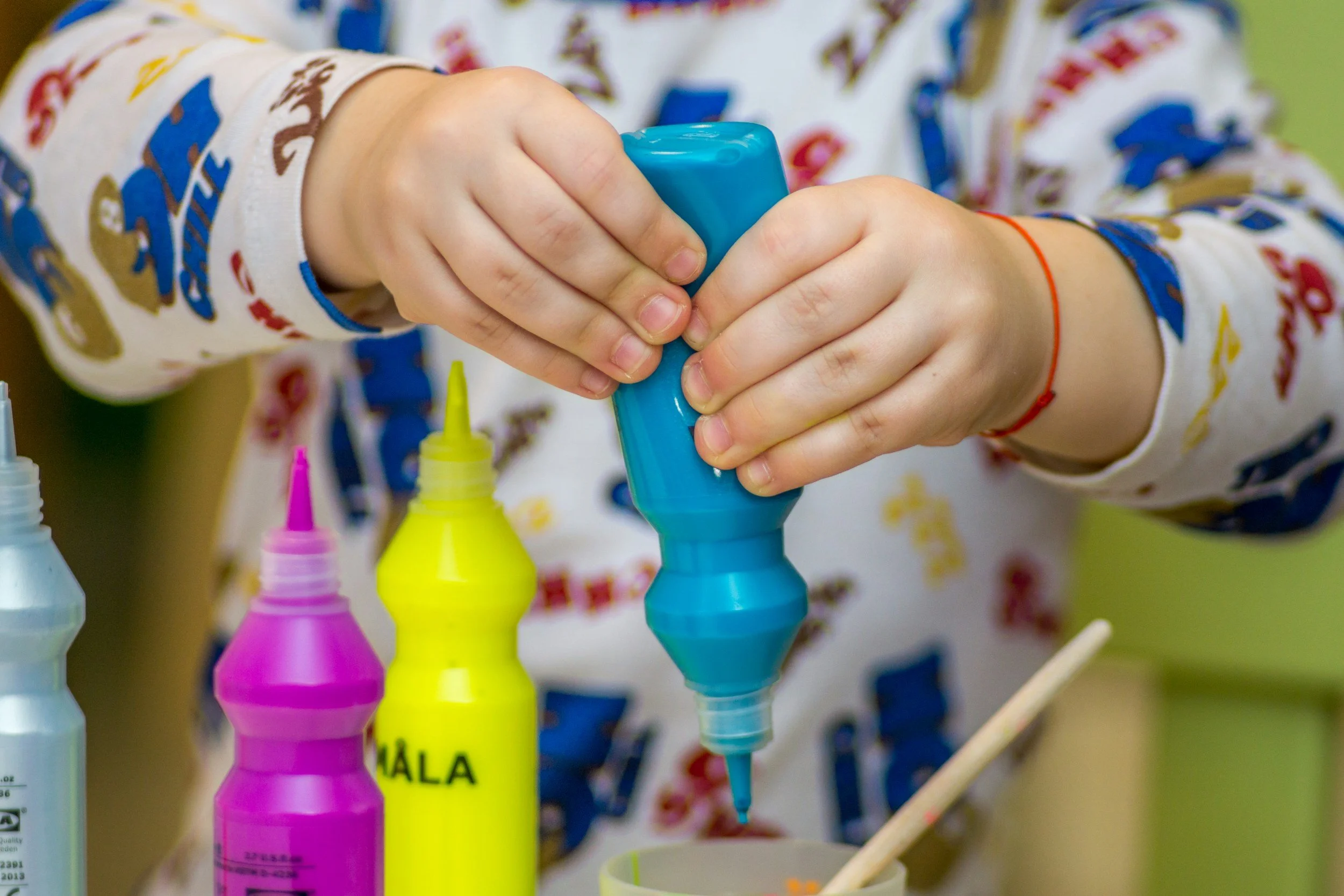
What happens when you mix blue and yellow? Most children know the answer is green, but color mixing can be so much more than learning which colors make new colors.
For young children, a simple color mixing activity can become an introduction to chemistry, observation, prediction, cause and effect, and scientific thinking. Instead of simply telling a child what will happen, we can give them the opportunity to make a prediction, test it, observe the result, and explain what they discovered.
That is what makes color mixing such a wonderful science activity for little scientists.
And the best part? You don't need complicated science equipment. With a few basic supplies and a little curiosity, you can turn color mixing into a hands-on science investigation at home or in the classroom.
Why Color Mixing Is a Science Activity
Color mixing may look like an art activity, but it also gives children an opportunity to practice important scientific skills.
When children experiment with colors, they can:
Make predictions
Observe changes
Compare results
Identify patterns
Ask questions
Test different combinations
Describe what they see
Develop explanations for what happened
For example, instead of telling a child, “Blue and yellow make green,” try asking:
“What do you think will happen if we mix these two colors?”
Now the child has a question to investigate.
Maybe they predict green. Maybe they predict blue. Maybe they think the colors will stay separate.
The prediction doesn't have to be correct.
In fact, an incorrect prediction can lead to an even better conversation:
“That's not what we expected. What happened instead?”
This simple shift—from giving children answers to giving them opportunities to investigate—is one of the foundations of scientific thinking.
Color Mixing and the Scientific Method for Kids
Young children don't need to memorize the steps of the scientific method to practice scientific thinking.
A color mixing experiment can naturally introduce several of those concepts.
1. Ask a Question
Start with something simple:
“What will happen if we mix red and yellow?”
You can also let your child come up with their own question.
2. Make a Prediction
Ask:
“What color do you think we'll make?”
Encourage your child to explain their thinking.
3. Test the Idea
Mix the colors together and observe what happens.
4. Make Observations
Ask:
What do you see?
Did the color change?
Is the new color lighter or darker?
Does it look like what you predicted?
5. Think About the Results
Finally, ask:
“Were we right? If not, what did we learn?”
This is an important step. Science isn't about always being right. It's about learning from what we observe.
5 Easy Color Mixing Activities for Kids
Here are several simple color mixing experiments for young children that can be done at home or in a classroom.
1. The Classic Primary Color Experiment
This is a great place to begin.
You'll need:
Red washable paint
Yellow washable paint
Blue washable paint
Small cups or containers
Paintbrushes or craft sticks
Paper
Give children opportunities to mix:
Red + Yellow = Orange
Yellow + Blue = Green
Blue + Red = Purple
But don't give them the answers first!
Instead, put two colors in front of them and ask:
“What do you think these will make?”
Have them make their prediction before mixing.
Once they've made the new color, ask:
“Were you surprised?”
“What other colors could we try?”
This turns a familiar art activity into a simple science investigation.
2. Color Mixing With Water
You can explore color mixing without paint.
You'll need:
Clear cups
Water
Red, yellow, and blue food coloring
Droppers
Fill several cups with water. Add a small amount of food coloring to different cups and let your young scientist experiment with combining colors.
This activity is especially useful for practicing observation and comparison.
Try asking:
“What happens if we add more blue?”
“What happens if we only add one drop?”
“Does adding more of one color change the final color?”
Now children aren't just discovering which colors mix to make green or purple. They're beginning to notice that the amount of each color can affect the result.
3. The Mystery Color Challenge
For this activity, let your child become the color scientist.
Choose a target color—for example, orange.
Give them red and yellow and ask:
“Can you figure out how to make orange?”
Don't tell them how much of each color to use.
Let them experiment.
They might make a bright orange, a reddish-orange, or a yellow-orange.
Then ask:
“How did you change the color?”
This is a wonderful opportunity to introduce the idea that changing the amount of something can change the result.
4. Can You Make a Color Lighter?
Once children have explored mixing colors, introduce white paint.
Give them one color and ask:
“What do you think will happen if we add white?”
Let them test it.
Then add a little more white.
Ask:
“What do you notice?”
Children will discover that adding white can make a color lighter.
You can challenge them to create several shades of the same color.
For example:
Dark blue → blue → light blue
This gives children an opportunity to practice comparison, observation, and identifying patterns.
5. Make a Color Prediction Chart
Turn your color mixing investigation into a simple data activity.
Create three columns:
1. Colors Mixed | 2. My Prediction | 3. What Happened
For younger children who aren't writing independently yet, they can draw the colors, point to choices, or tell an adult what to record.
This is a simple introduction to recording observations and comparing predictions with results.
Don't Give the Answer Too Quickly
One of the biggest opportunities in a color mixing activity is what happens before the colors are mixed.
If we immediately tell a child:
“Red and yellow make orange!”
we've given them information.
But if we ask:
“What do you think red and yellow will make?”
we've given them a problem to solve.
Neither approach is wrong. There is certainly a place for teaching children facts.
But young children also need opportunities to figure things out.
Let them make a prediction.
Let them be surprised.
Let them make a mess.
Let them say, “I thought it was going to be purple!”
Those moments are where some of the most valuable learning can happen.
Questions to Ask During a Color Mixing Experiment
You don't need to lecture your child about color theory while they're experimenting.
Instead, try asking questions that encourage them to think.
Before the experiment:
What do you think will happen?
Why do you think that?
Which color do you think we'll make?
What makes you think that?
During the experiment:
What do you notice?
What is changing?
What happens if we add more?
What happens if we add less?
After the experiment:
Was your prediction correct?
What surprised you?
What would you change?
What do you think would happen if we tried two different amounts?
What other colors would you like to investigate?
These questions encourage children to explain their thinking rather than simply provide a one-word answer.
Color Mixing Is About More Than Colors
A child may finish a color mixing activity knowing that blue and yellow can make green.
That's great!
But there's something more important happening underneath.
They're practicing how to:
Ask → Predict → Test → Observe → Think → Try Again
Those skills are useful far beyond a science activity.
A child who learns to ask, “How could I find out?” is developing a mindset that can help them solve problems in school, navigate new situations, evaluate information, and make decisions throughout their lives.
They don't have to become scientists.
They don't even have to particularly love science.
Science is simply a wonderful way to give children opportunities to practice thinking.
Bring More Science Into Your Child's Day
At Itsy Bitsy Scientist, we believe young children deserve opportunities to explore all kinds of science—not just the topics they might encounter in a traditional elementary science curriculum.
Our K–2 science program introduces children to fascinating fields including biology, chemistry, physics, microbiology, neuroscience, ecology, paleontology, archaeology, meteorology, geology, engineering, and astronomy.
Each unit combines storytelling, discussion, hands-on activities, worksheets, and creative activities to help young children explore science in an engaging, age-appropriate way.
Because the goal isn't to turn every child into a scientist.
The goal is to help children become curious, confident thinkers who aren't afraid to ask, “Why?”
And that's a skill they'll be able to use for the rest of their lives.
Ready to inspire your young scientist? Explore Itsy Bitsy Scientist and discover a whole web of science waiting to be explored.
